
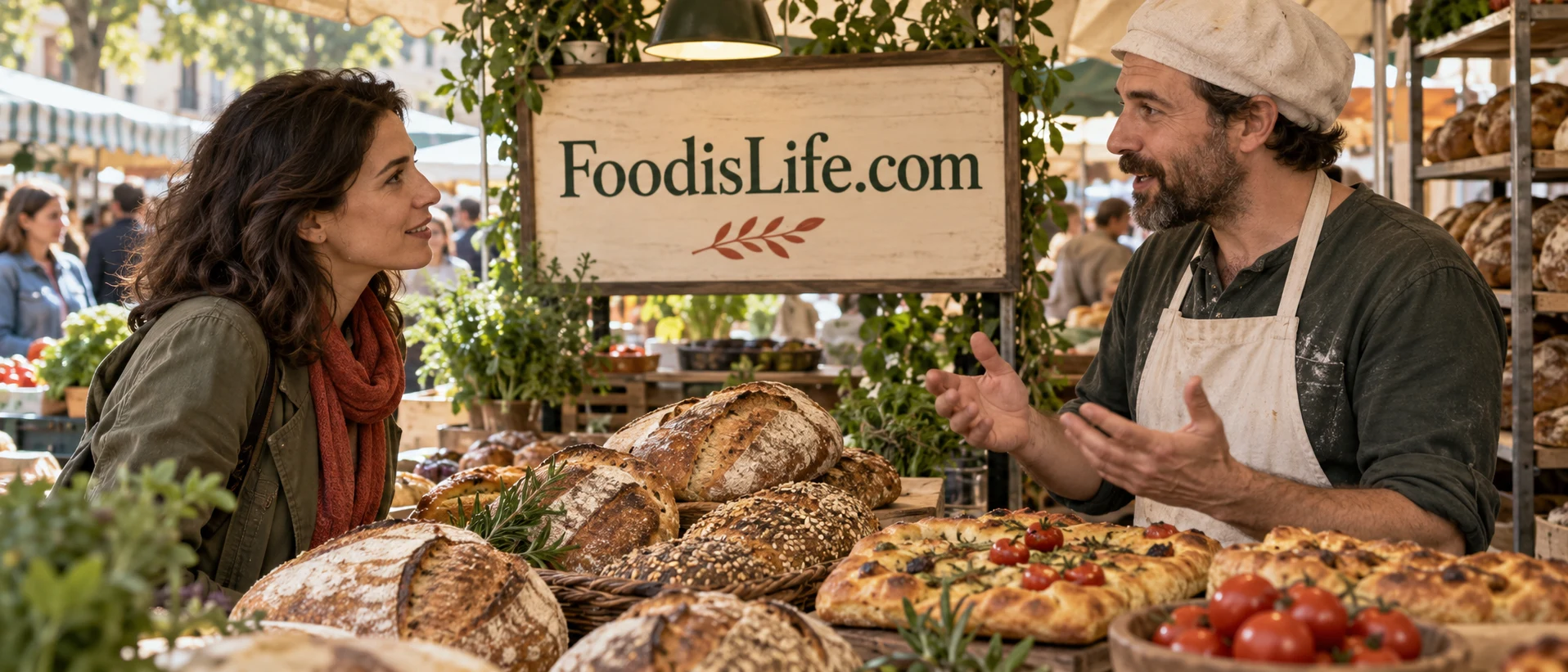
A food publication can help a reader notice what is happening around a dish: the person making it, the place supplying an ingredient and the small decisions that change its character. I would start in one town or region and commission three stories that can only be reported there. This is an illustrative publishing concept for a future owner of FoodisLife.com, with an editorial product rather than a restaurant behind it.
Choose a beat with enough texture
A useful opening beat could be the people who feed a single market neighborhood. That gives the publication a physical boundary and several possible subjects: a baker preparing before opening, a stallholder choosing produce and a cook adapting a family dish for a small kitchen. The stories share a place but answer different questions. Avoid commissioning three profiles that all follow the same childhood-to-career narrative.
The reader promise should be specific enough to test. A short weekly edition might offer one reported feature, one practical way to explore the neighborhood and one recommendation with a clearly stated basis. Readers should know whether a venue was visited, an item was tasted or a detail came from an interview. Those distinctions help someone decide how to use the story.
Commission the reporting before the headline
Give each writer a question, a reporting budget, a deadline and a clear agreement about rights. For example: how does a baker decide which loaves to make on a quiet Tuesday? The answer needs observation of the work, not a list of flattering adjectives. Ask for the details that explain a decision, and make space for a subject to say that a question rests on the wrong assumption.
The Smithsonian’s oral history guidance is a useful resource for interview preparation, open questions and respect for participants. A short food feature is a different format from an archival oral history, but it benefits from the same attention to what a person actually said. Obtain recording permission, preserve notes and check names, places and unfamiliar terms. Do not turn someone’s memory into a verified historical claim without additional evidence.
Build a page around something observed
A story about a dish should show the relevant work. Photograph the preparation, ingredients and finished result when access permits. Captions can identify what is visible and who is present. Get permission for images and agree how the work will be credited. A decorative stock photograph may look inviting, but it cannot document the person described in the article.
A useful story structure starts with an observed moment, explains the question and then follows the work that answers it. Add a practical box only when the reader can act on it: verified opening information, a technique demonstrated by the subject or a route to further reading. Recheck time-sensitive details before publication. An old menu or a secondhand social post should not become the basis for a current recommendation.
Make discovery different from advertising
The initial commercial options might be reader membership, clearly labeled sponsorship or a separately sold neighborhood guide. Choose one primary model for the test. If a business pays for coverage, label the placement where readers encounter it and keep it distinct from independently commissioned reporting. A free meal, travel contribution or affiliate arrangement also needs an appropriate disclosure.
An advertiser can buy a defined placement, but should not buy an unmarked recommendation or the right to suppress legitimate criticism. Write that policy before seeking sponsors. It helps a small editorial team answer commercial requests consistently. If the budget cannot yet support independent visits and reporting, narrow the publication’s promise to what the team can honestly produce.
Put distribution inside the commission
Each feature can become an email introduction, a short social excerpt and a searchable page on FoodisLife.com. Decide those outputs early so the photographer knows which orientations are needed and the writer can identify one self-contained detail for an excerpt. Keep the complete story on a stable URL. An excerpt should invite reading without stripping away a qualification that changes the meaning.
Ask interview subjects whether they would like the published link, but do not make promotion a condition of being covered. A local library, market association or independent shop may be a relevant distribution partner if it wants the material and the arrangement is clear. Respect each group’s rules and do not treat public contact details as permission to add people to a mailing list.
Measure a reader’s next visit
For the first three stories, look at completed reading, replies and voluntary email subscriptions with an appropriately configured privacy approach. The useful question is whether readers can describe what they got from the edition and whether they want another. Raw page views do not tell you if a feature answered its question or merely had a popular photograph.
Keep a corrections route visible. If a subject flags a factual error, investigate and explain any correction in the article. Maintain an internal record of sources and image permissions so a later editor can understand the work. This is part of running a publication people can rely on, even when the team is only one editor and a few contributors.
Make three stories, then choose the rhythm
Commission the baker’s production decision, the stallholder’s ingredient selection and the cook’s adaptation of a dish in one place. Publish them as a coherent first edition and ask readers which question they want explored next. The domain can give the work a warm, broad identity. The reporting gives people a reason to return, and the first three pieces will reveal the pace the team can sustain.