
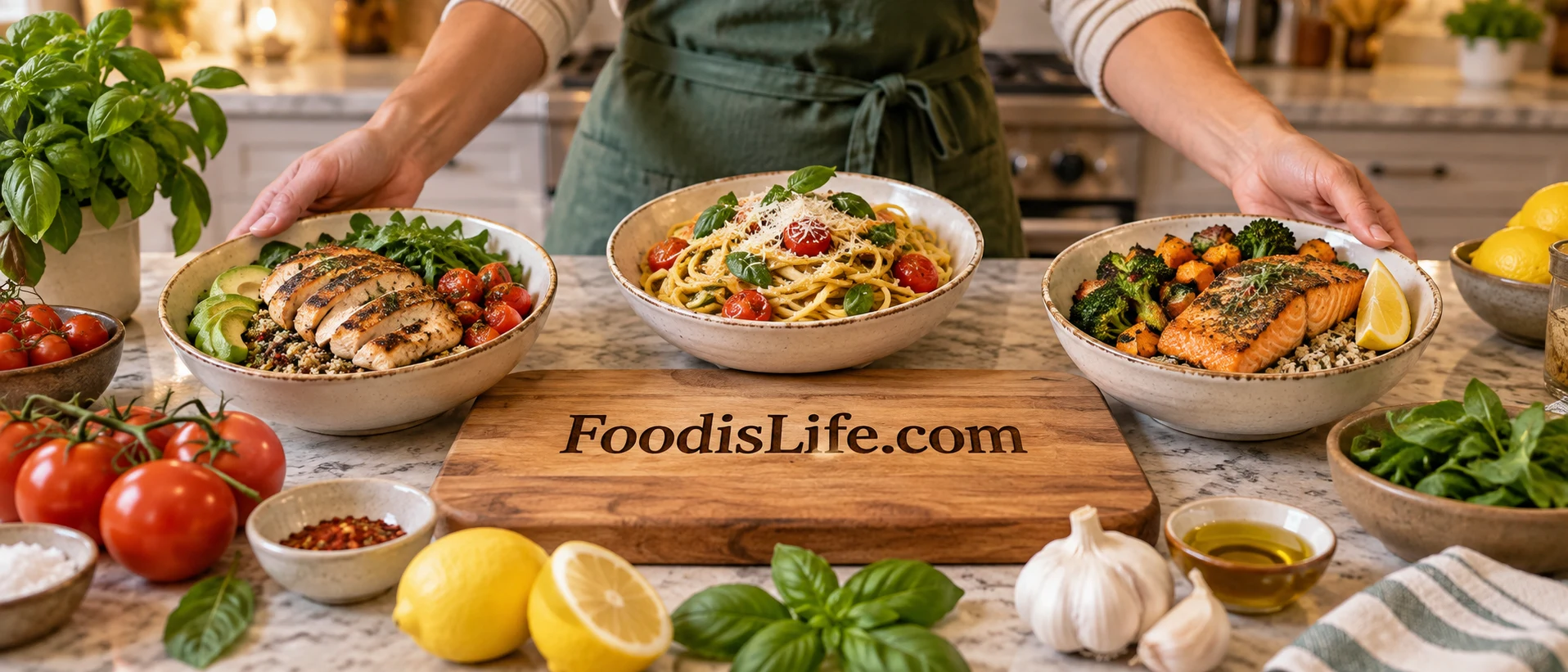
A weekly cooking membership has a useful job: help someone decide what to cook before the evening gets away from them. I would start with three dinners, a short shopping list and one flexible way to use what remains. The member should be able to open the plan on a phone in a shop and understand it without watching a video first. This is an illustrative business concept for a future owner of FoodisLife.com.
Pick a household you can serve well
“Busy people” is too broad for a first offer. A more workable starting group might be two-person households that cook three evenings a week, use a standard hob and oven, and want to buy ingredients in an ordinary supermarket. That describes a set of constraints a menu writer can test. A family with young children or a shared apartment may need a different serving model, shopping list and approach to substitutions.
Before creating a subscription, talk through one recent week with five potential members. Ask which meals were cooked, which were abandoned, what was already in the cupboard and who did the shopping. An abandoned meal can reveal more than a favorite recipe: perhaps the cook got home late, the instructions required two pans at once, or a large bunch of herbs had only one use. Keep those answers attached to the plan you write.
Make the weekly package small
A first edition could contain three tested recipes, a combined ingredient list, a preparation order and a short “change of plans” section. Give quantities for the chosen household size and make the equipment visible before the recipe. Separate active work from time spent waiting. A tray in the oven still occupies the oven, even when it leaves the cook free to do something else.
For an illustrative menu, use a tomato and chickpea stew, roast vegetables with a simple grain, and a skillet of beans with greens. Tomatoes, onions and greens have more than one role, but the dinners should taste and feel different. A member buying one bunch of parsley should know where the rest can go. Test each meal as written, including the chopping and cleanup that make a short recipe feel longer in real life.
Build in an exit route
The fourth evening needs a flexible meal assembled from ingredients that can wait. It might be eggs with toast and vegetables, or a pantry pasta with a separately stored topping. Present it as an alternative, not an obligation to rescue every leftover. Ask members to use the official cold food storage chart for item-specific storage guidance rather than treating a weekly menu as permission to keep everything until Friday.
A practical publication should distinguish recipe substitutions from food safety advice. Swapping an herb changes flavor; changing how cooked food is cooled raises another kind of question. Link the relevant official guidance when it matters and avoid improvising storage rules. This keeps the member’s cooking decision simple while giving them a reliable place to check a detail.
Distribute where the decision happens
The first version could arrive by email on a day members choose before shopping. A mobile web edition would hold the complete recipes and shopping list. Social clips can show one useful technique, but the core menu should remain usable without finding five separate posts. An existing food creator could invite a small portion of an audience to test this format, with permission to contact them about that specific trial.
A neighborhood grocer or cooking teacher could also help recruit a pilot, provided the arrangement is clear. Do not assume a retailer will promote it simply because ingredients appear in the plan. Bring a sample, explain whom it serves and agree on any commercial relationship. If a paid recommendation is involved, disclose it where readers encounter the recommendation.
Learn from the cooking, then price the work
At the end of a week, ask three questions: which meal got cooked, where did the instructions slow you down, and what ingredient was left without a use? Offer a free-text reply rather than making members complete a long survey. Record the difference between a recipe people liked and a recipe they actually made. Those are separate signals, and a membership needs the latter to become part of a routine.
Keep a simple cost sheet for recipe development, ingredient testing, editing, photography and member support. A small monthly subscription is one possible revenue model; a seasonal package is another. Choose a price only after seeing the work required and asking pilot participants about willingness to pay. No revenue forecast can substitute for a member returning for a second month.
What to make before a launch
Prepare one complete week and cook it from the combined shopping list yourself. Then give the same package to five households that match the intended audience. Explain that this is a test and ask them to cook in their normal kitchens with their normal schedules. A beautiful food photograph cannot tell you whether the list omitted an onion or whether the recipe assumed a pan they do not own.
FoodisLife.com could give this small, recurring service a welcoming home, with room for members’ substitutions and later seasonal collections. The first deliverable remains modest: one week that works. If the test shows the recipes are useful but the schedule is wrong, change the schedule before adding more content. The next step is to finish that single menu and learn from five real cooking weeks.